
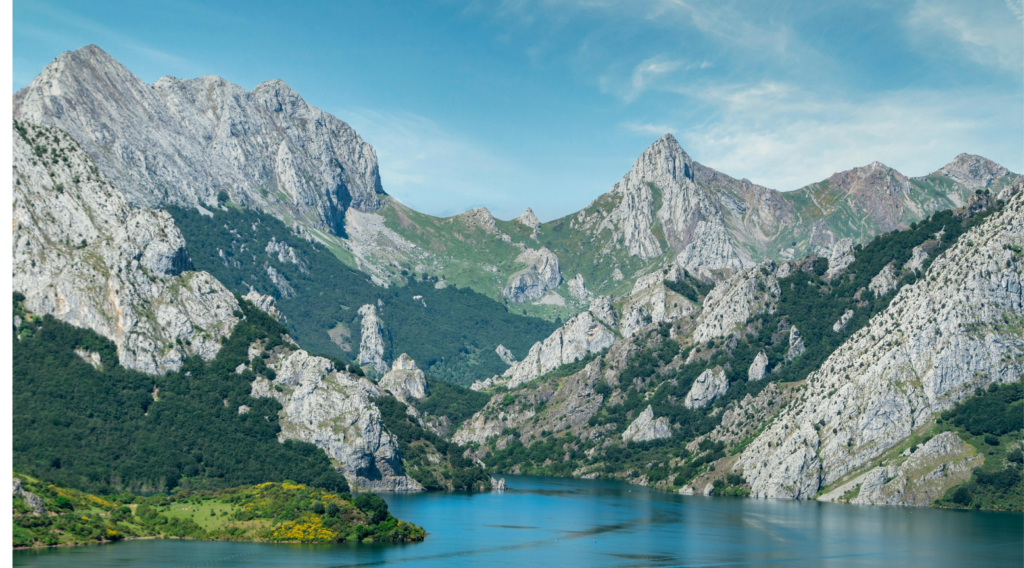
Asturias is known for its rugged coastline and mountain landscape. You see steep cliffs along the Cantabrian Sea that lead into small harbors and sandy coves. Inland, the land rises quickly into green valleys, limestone peaks, and mountain passes. The contrast between the sea and the mountains is a key feature of the region.
You see beauty in Asturias through small fishing towns, cliffside villages, and quiet mountain settlements rather than large cities. You notice houses facing the sea, stone villages in the hills, and small historic centers close to nature. These elements shape how towns look across the region. In this guide, you will discover the most beautiful towns in Asturias and what makes them stand out.
- What Makes a Town Beautiful in Asturias?
- Quick Answer — What Is the Most Beautiful Town in Asturias?
- Most Beautiful Coastal Towns in Asturias
- Most Beautiful Mountain Villages in Asturias
- Traditional Rural Villages in Asturias
- Beautiful Cities in Asturias (Urban Alternatives)
- Suggested Routes to See the Most Beautiful Towns
- Practical Travel Information
- Conclusion
What Makes a Town Beautiful in Asturias?
While beauty is subjective, you notice that towns in Asturias that many people find beautiful share similar traits. These qualities link closely to the region’s geography, history, and daily life. They help you understand why some places leave a stronger visual impression than others.
Natural Setting
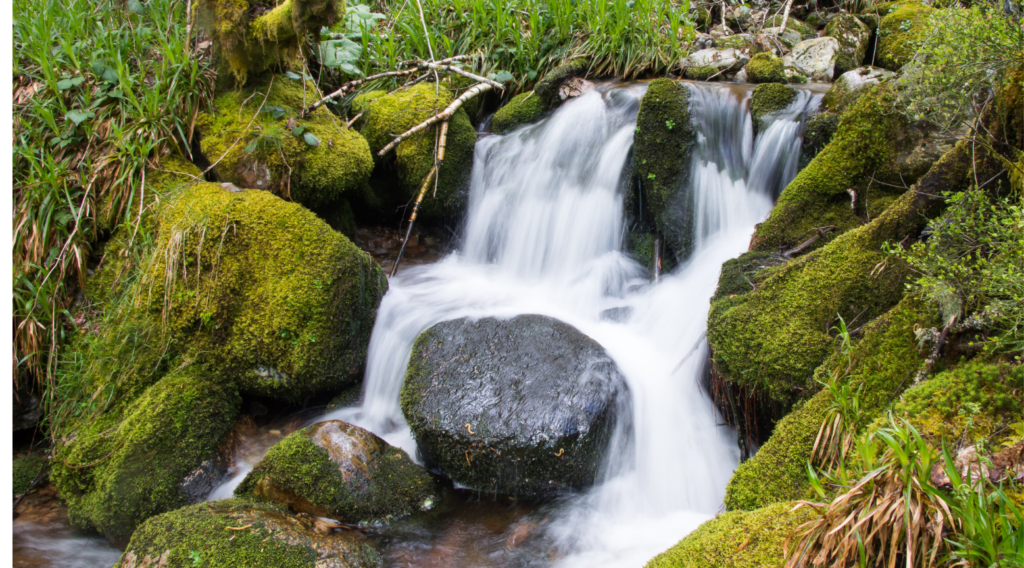
You first notice beauty in Asturian towns through their surroundings. Before looking at buildings or streets, the land itself sets the tone.
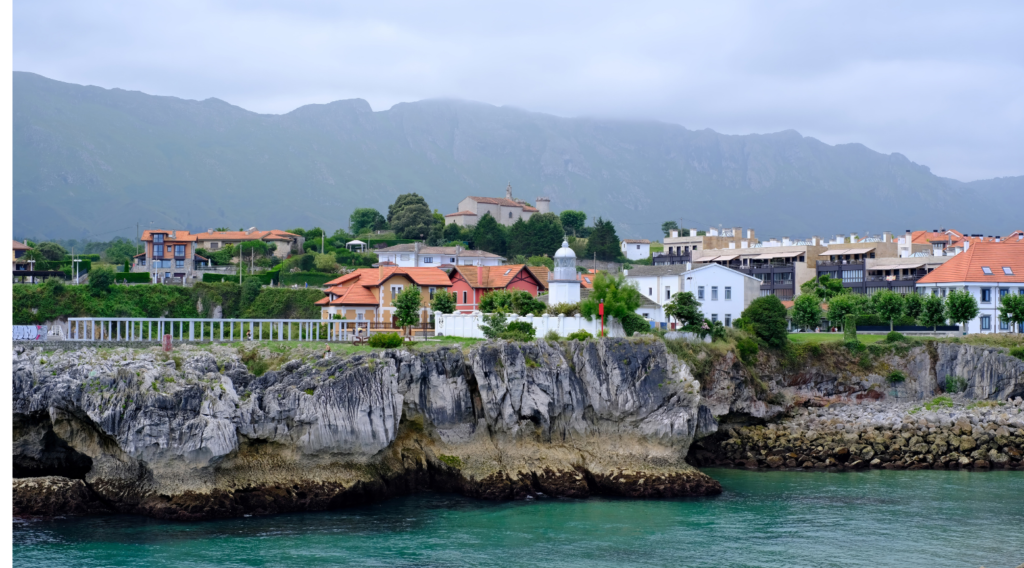
Along the coast, towns sit among steep cliffs, small harbors, and open views of the Cantabrian Sea. You notice buildings grouped around sheltered inlets or set above the shore. This creates contrast between colorful facades, dark rock, and the sea. Beaches, sea stacks, and coastal paths often sit close to historic centers, and you can reach them on foot.
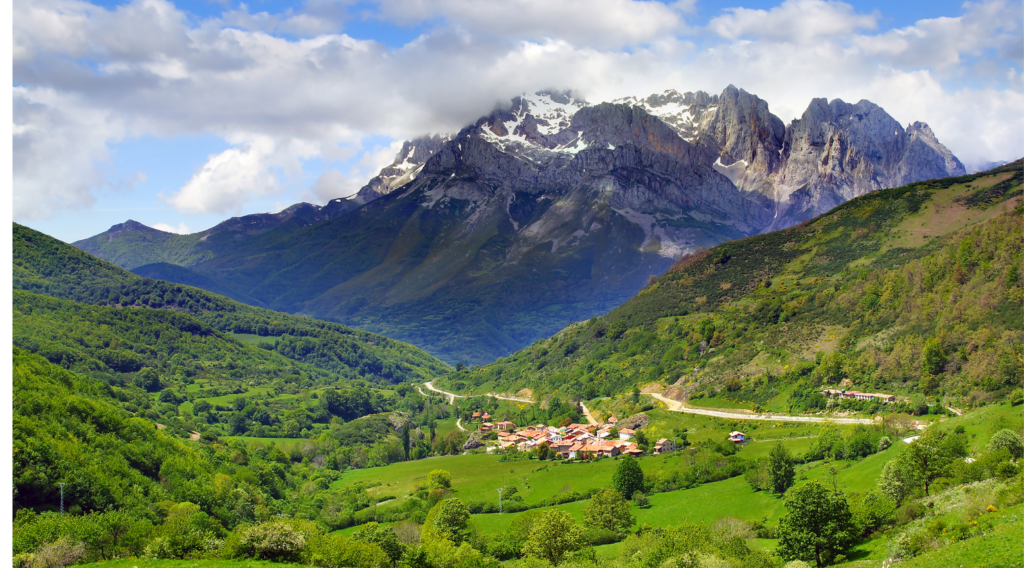
In the mountains, beauty comes from scale and distance from development. You find villages surrounded by green valleys, rivers, forests, and limestone peaks. Modern construction stays limited. Pastures, stone walls, and grazing animals remain part of daily life, which keeps a clear link between the village and its surroundings.
In both settings, the towns that stand out most are shaped by the land itself. You feel that nature sets the frame, and daily life fits within it rather than working against it.
Architecture and Town Layout
Once you move through the town, architecture becomes the next thing that shapes how it feels. In Asturias, the places people find most beautiful tend to follow older building patterns that respond directly to climate, terrain, and local materials.
You often see stone houses with tiled roofs in both coastal and mountain areas. Builders place them close together to block wind and rain. In fishing towns, buildings rise along narrow streets. Colorful facades stand out against rock and sea. Inland villages use stone and earth tones that blend with the land.
Town layouts stay compact, and you move through them on foot. Historic centers are small and easy to cross. Many settlements sit on hillsides or natural terraces. Homes, streets, and plazas follow the shape of the land. This creates layered views, clear viewpoints, and a strong sense of place.
You do not see wide boulevards or large development. Asturian towns focus on human scale. Architecture supports the scenery instead of taking over.
Views and Viewpoints
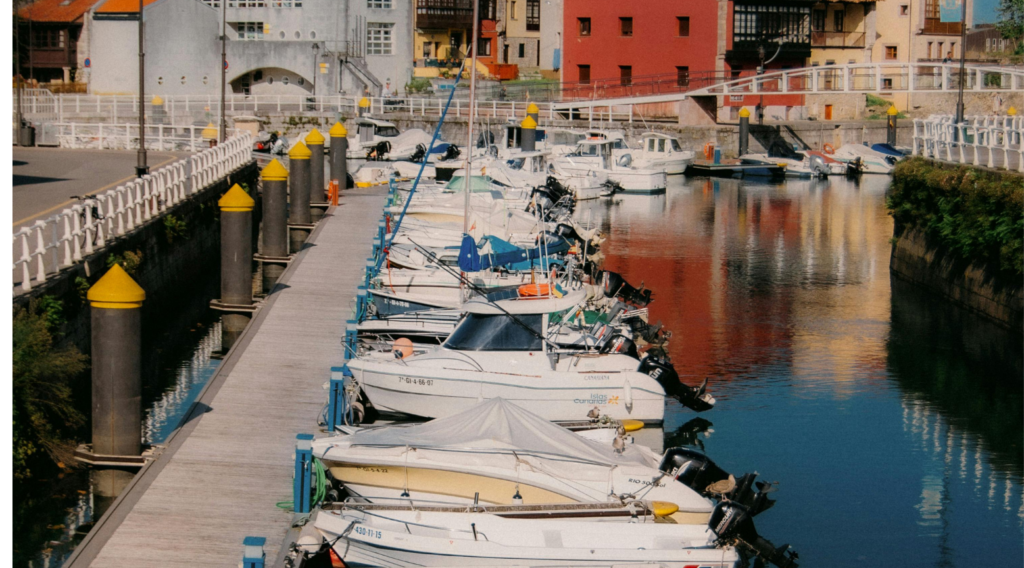
What often stays with you longest, however, is the view. Many Asturian towns reveal themselves gradually, through lookout points, steep streets, and paths that open onto sea or valley without warning.
In coastal towns, viewpoints look down toward harbors, beaches, and cliffs. You can see how buildings follow the shape of the shoreline. In mountain villages, lookout points open onto valleys, rivers, and limestone ridges. These views highlight space and distance from larger development.
Walkable routes inside the town matter just as much. You move through steep streets, coastal paths, and hillside walks that shift your view as you go. The town does not show everything at once. You discover it step by step, through a bend in the road, a small plaza, or a path that climbs upward.
Towns that combine clear viewpoints with walkable layouts tend to leave the strongest visual impression on you.
Cultural and Local Character
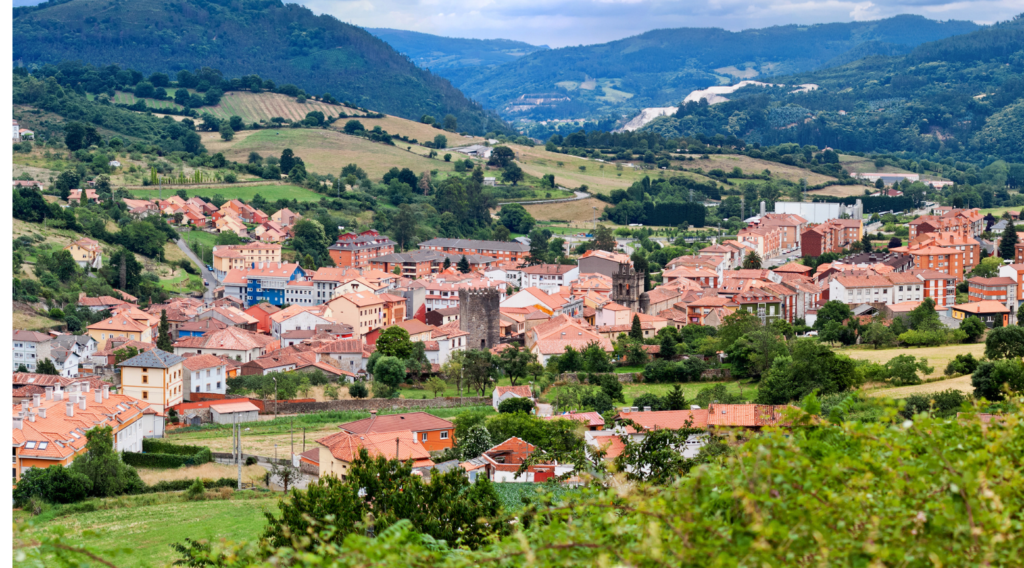
Beyond scenery and buildings, beauty in towns across Asturias links closely to local culture and daily life. You notice that places with a strong local identity feel more real and visually convincing.
Along the coast, many towns grow from a long fishing tradition. You see working harbors, boats tied along the quay, and seafood restaurants inside former fishermen’s houses. Daily activity shapes the scene. Nets dry near the water. Boats return to port. Locals gather close to the harbor. This everyday use adds weight to how the town looks.
Inland, mountain villages reflect rural life tied to farming and livestock. You find stone barns, pastures, and narrow lanes that serve practical needs. These features exist for daily use, not decoration. This link between past and present keeps the village character intact.
Towns that protect traditional work and social life feel less staged to you. They feel rooted in place. This strengthens their natural beauty instead of pulling attention away from it.
Preservation and Scale
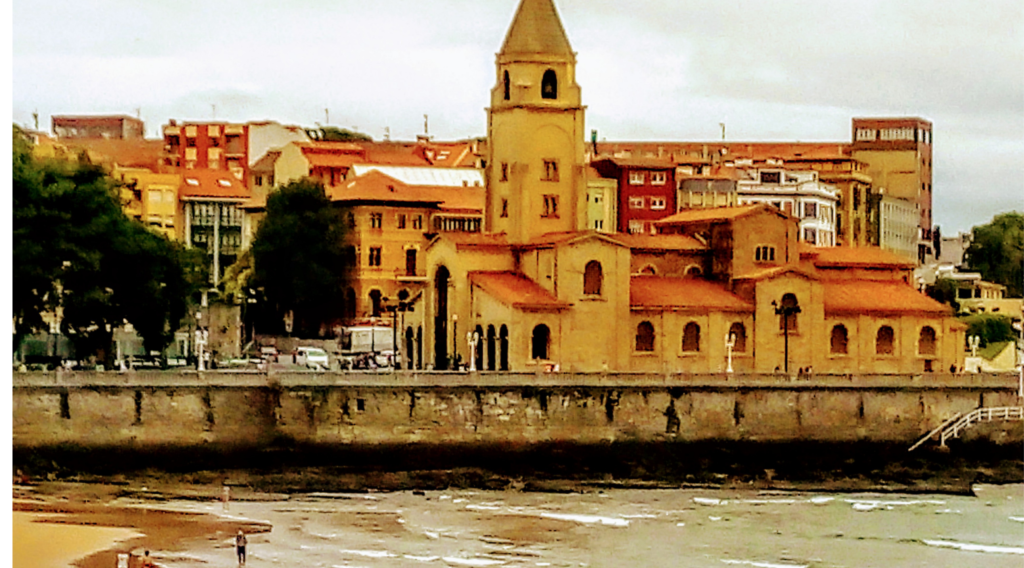
As you move through certain towns in Asturias, you notice what is missing as much as what remains. There are no oversized buildings, no wide roads cutting through historic centers, and no pressure to expand beyond human scale. What you see instead is preservation.
These towns avoid large development and keep a human scale. Buildings fit their surroundings. Streets stay narrow and easy to walk. New construction remains limited or blends into what already exists. This helps the town sit naturally within the landscape instead of standing apart from it.
On the coast and in the mountains, preservation protects the link between the town and its setting. You keep clear views of the sea, valleys, or peaks. Nature stays present and visible. Towns that resist overbuilding maintain this balance.
Together, preservation and scale explain why some Asturian towns feel balanced and lasting. These qualities shape how you perceive beauty in the region.
Quick Answer — What Is the Most Beautiful Town in Asturias?
The Town Most Often Considered the Most Beautiful: Cudillero
When people name the most beautiful town in Asturias, many point to Cudillero. You hear this from travelers, photographers, and local guides who visit the region.
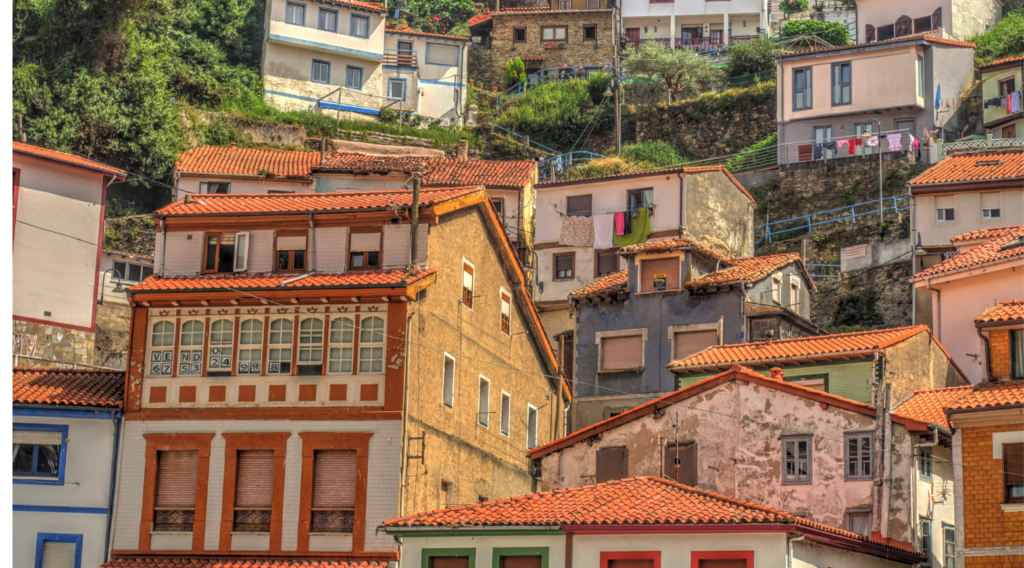
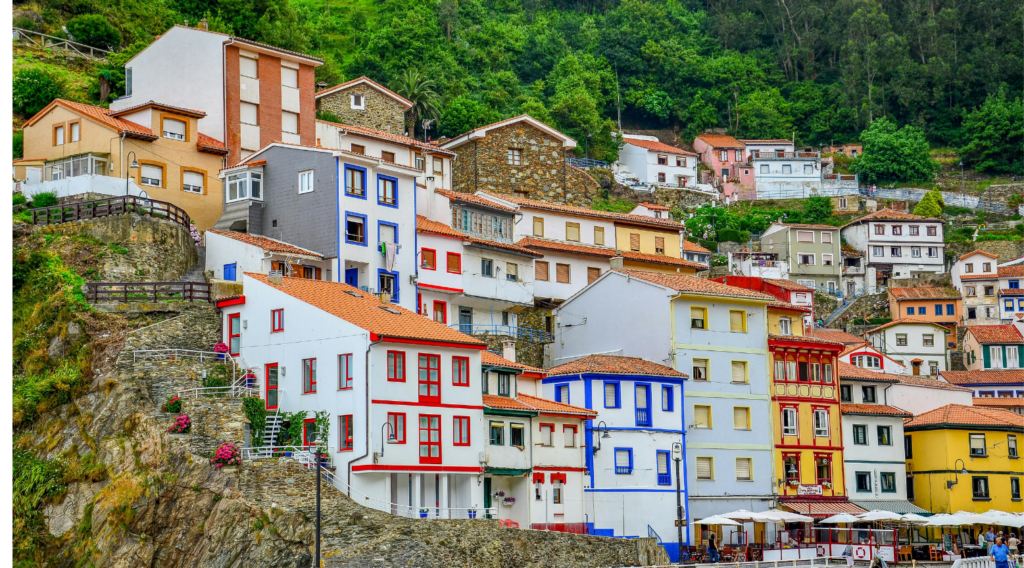
The town sits inside a steep coastal bowl that forms a natural harbor. Houses rise in tight layers from the water, creating an amphitheater shape. You see soft but colorful facades set against cliffs and the sea, which gives the town a clear and recognizable look.
Cudillero’s layout pulls your eye upward. You find several viewpoints above the harbor that look out over the town and the open Cantabrian Sea. From these spots, you clearly see the town’s compact size and unusual shape, which makes it stand out visually.
The fishing-town identity also plays a key role. You see the harbor in daily use, with boats and local activity still present. This connection to the sea supports the town’s character and keeps its appearance grounded in real life.
Because of its setting, visual impact, and preserved local identity, Cudillero is most often named the most beautiful town in Asturias.
Most Beautiful Coastal Towns in Asturias
Asturias has a coastline filled with fishing villages, historic ports, and small seaside towns. You often see these places set within dramatic natural surroundings and shaped by traditional architecture. The coastal towns listed next are the ones many people consider the most beautiful in the region.
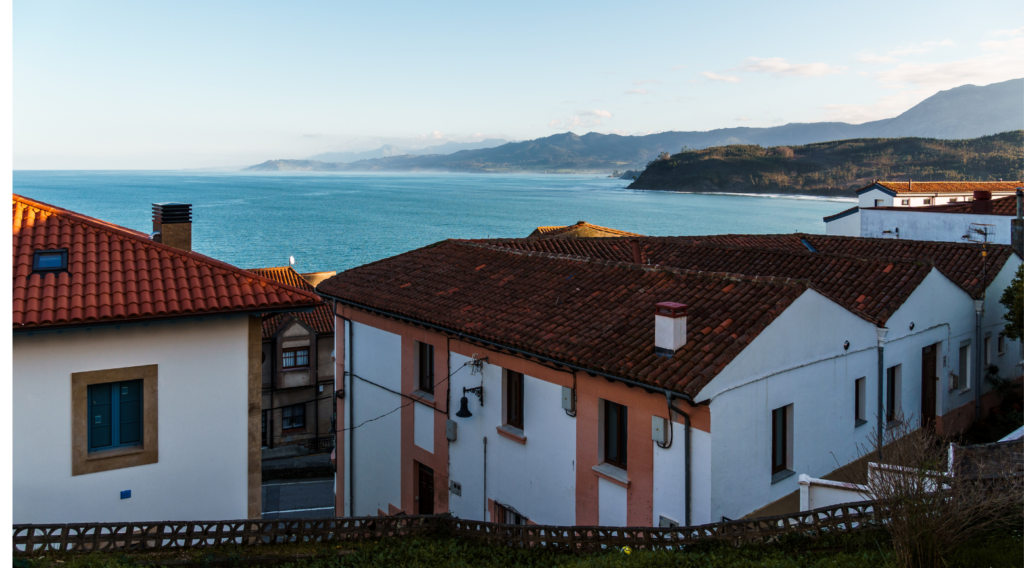
Lastres
Built on a hillside along the Asturian coast, Lastres looks out over the sea and down toward a small harbor.
As you move through the village, you pass narrow streets lined with stone buildings. The layout clearly favors walking, with limited space for cars. The town feels shaped by its location rather than by later development.
Together, the hillside setting, preserved streets, and open sea views make Lastres one of the more visually distinctive coastal towns in Asturias.
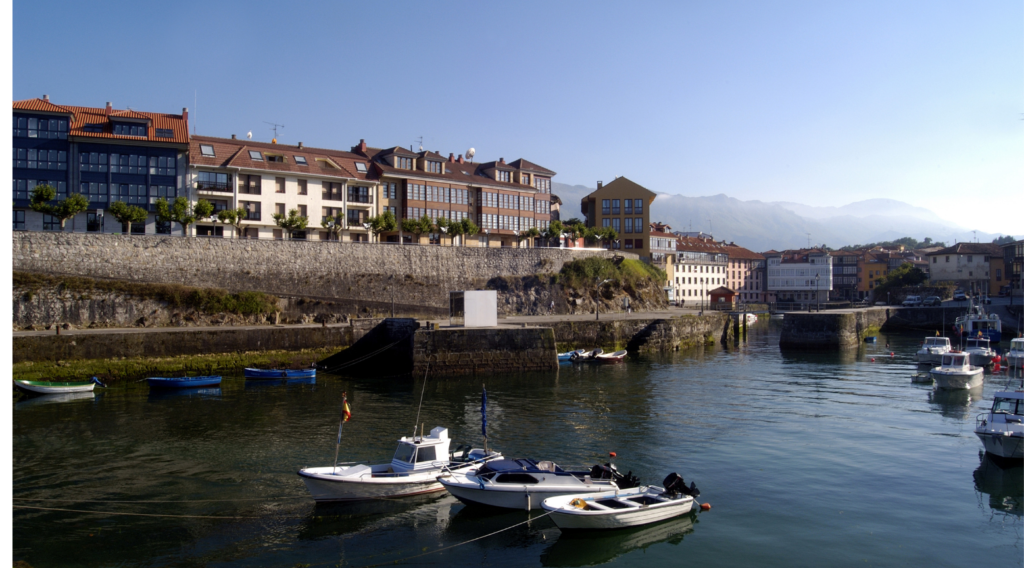
Llanes
In Llanes, the historic center sits right next to the sea, which is not common along the Asturian coast. The town is larger than nearby villages, but it still feels easy to get around on foot.
You move through an old town with medieval walls, stone buildings, and a small harbor closely connected to the center. From here, paths lead directly toward the coast, where cliffs and viewpoints sit just outside the town.
Around Llanes, you find several beaches within walking distance. There are also seaside walks that follow the coastline and give clear views of the Cantabrian Sea. These areas are easy to reach from the town without needing a car.
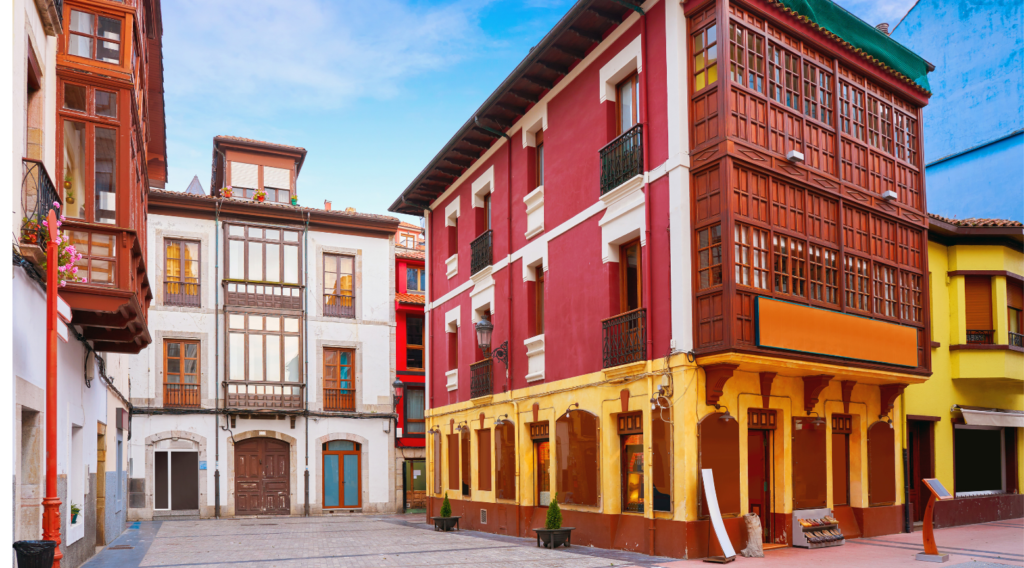
Ribadesella
Where the Sella River meets the sea, Ribadesella spreads out around a wide estuary. Compared to many nearby towns, the area feels more open, with beaches on one side and cliffs on the other.
You can walk along a seaside promenade that runs next to the shoreline. From there, you look across the river mouth and toward the cliffs nearby. The historic center sits slightly inland and on higher ground, staying quieter while still close to the waterfront.
The town is not built densely or at steep height. Buildings are spaced out more than in cliffside villages, and the river and sea remain visible from many areas.
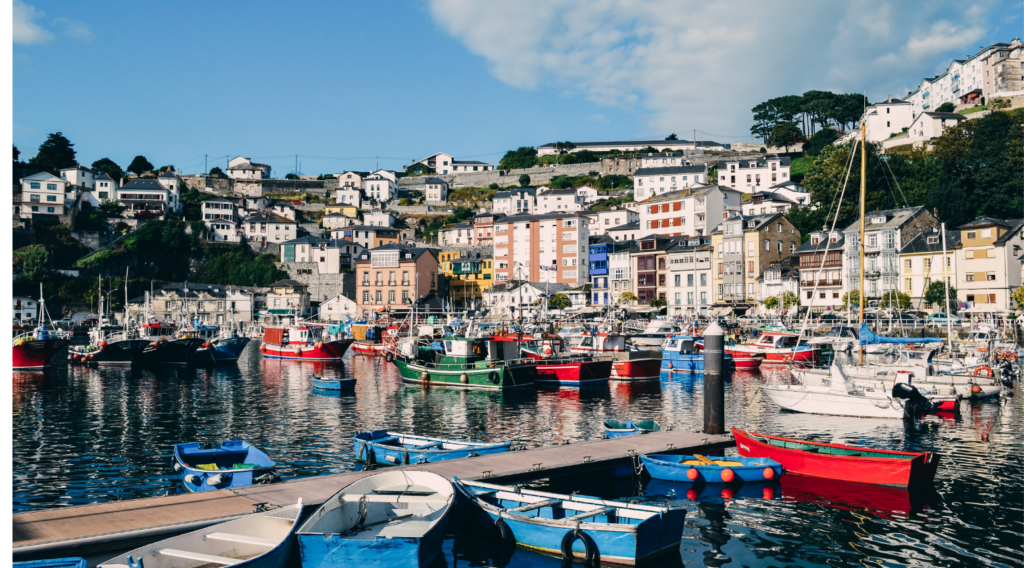
Luarca
Everything in Luarca centers on its sheltered harbor, with hills on both sides of the port. The town is laid out from the waterfront up toward higher streets, following the slope of the land.
The harbor is still the main focus of daily life. You notice fishing boats, quays, and waterfront buildings that are actively used. From higher areas, you can see back across the port and out toward the open sea. A lighthouse sits at the edge of the coast and is visible from many parts of town.
The historic center has narrow streets and traditional buildings. The scale feels practical and tied to everyday use rather than designed mainly for visitors. You do not see dramatic cliffs or large open spaces here.
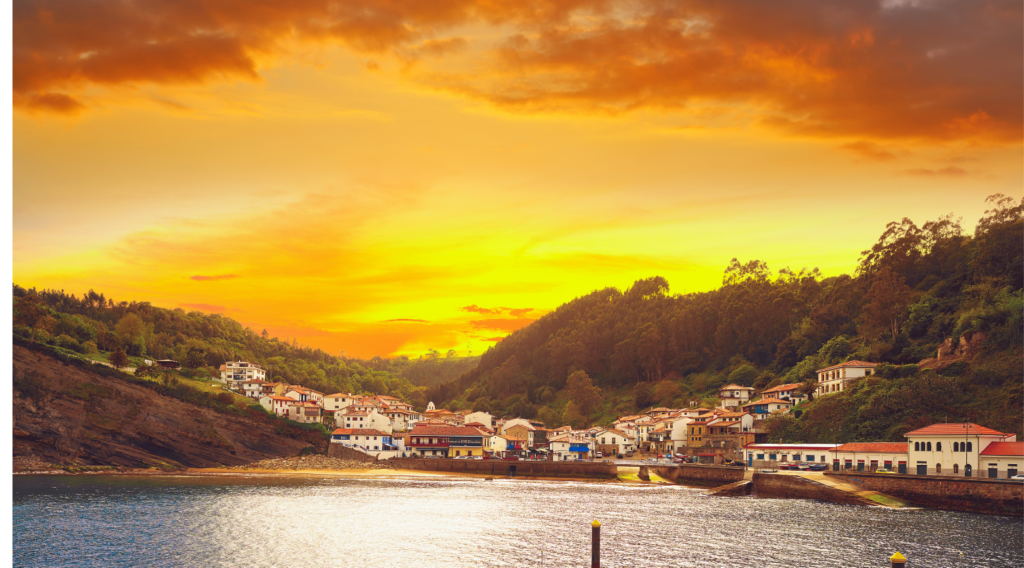
Tazones
This village is small, with houses and streets grouped tightly around the water.
You see low stone houses set close together, with narrow streets running between them. Most buildings sit near the harbor, and there is little space between daily life and the waterfront. Modern development is limited, and the village keeps a consistent look throughout.
Fishing still shapes how the village works. Boats, equipment, and working spaces sit alongside homes rather than being pushed out of sight. Everything feels practical and closely connected.
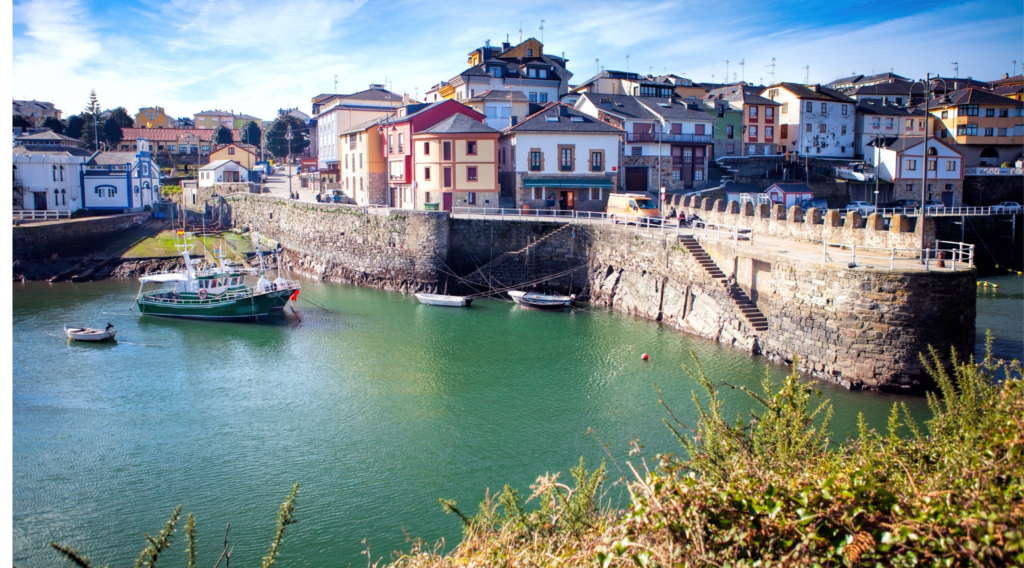
Puerto de Vega
Puerto de Vega is larger than Tazones, but it still feels easy to take in on foot.
As you spend time near the waterfront, you see fishing boats, quays, and working buildings grouped around a sheltered inlet. From nearby streets and small lookout points, the sea stays visible and port activity remains close by.
Walking through the village, you notice simple stone buildings with plain facades. The buildings are practical and clearly used every day, rather than designed mainly for visitors.
Puerto de Vega gives a clear picture of how a working coastal village functions in western Asturias.
Viavélez
Viavélez sits inside a narrow inlet, with steep cliffs on both sides and very little space beyond the water.
You see houses grouped closely around the harbor, built just above the shoreline and following the curve of the inlet. The cliffs stand directly behind the village, making the setting feel enclosed and clearly defined.
There is no clear separation between the harbor and the homes. Boats, fishing gear, and residential buildings share the same limited space. Everything is close together and used in a practical way.
Because of its small size, tight layout, and limited development, Viavélez feels more contained than most other coastal villages in Asturias.
Most Beautiful Mountain Villages in Asturias
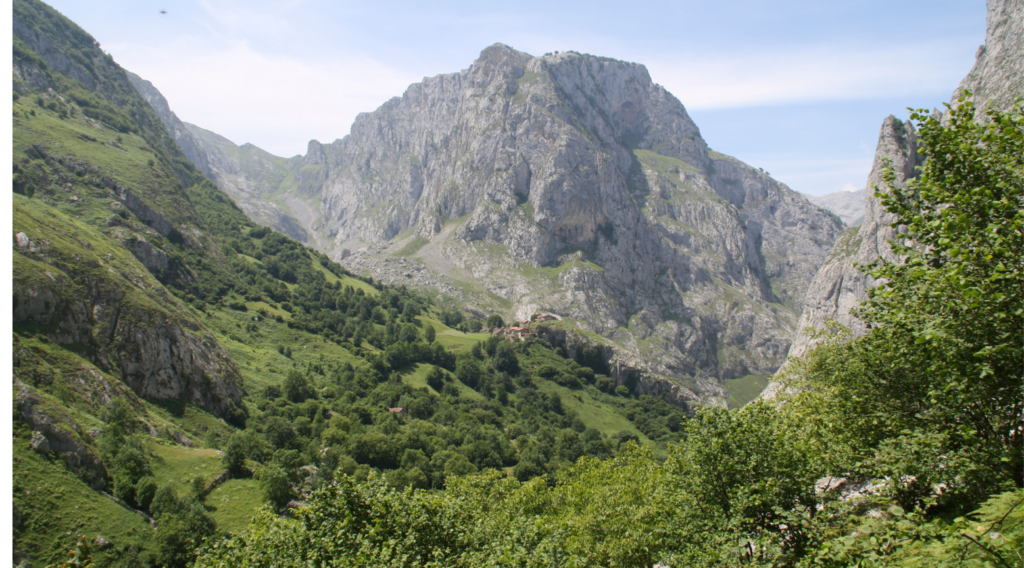
Bulnes
Bulnes is one of the most visually striking mountain villages in Asturias. Many people consider it the most beautiful inland settlement in the region.
You find Bulnes deep inside the Picos de Europa. Steep limestone peaks and narrow valleys surround the village and set its scale. For much of its history, you could reach Bulnes only on foot. This limited access helps preserve its traditional buildings and natural setting.
Stone houses and narrow paths follow the shape of the land. You do not see roads cutting through the village. The lack of cars adds to the sense of distance and keeps the mountains as the main presence around you.
Bulnes draws its appeal from its setting rather than size or detail. You see a small settlement set against large peaks. This contrast makes Bulnes one of the most memorable villages in Asturias.
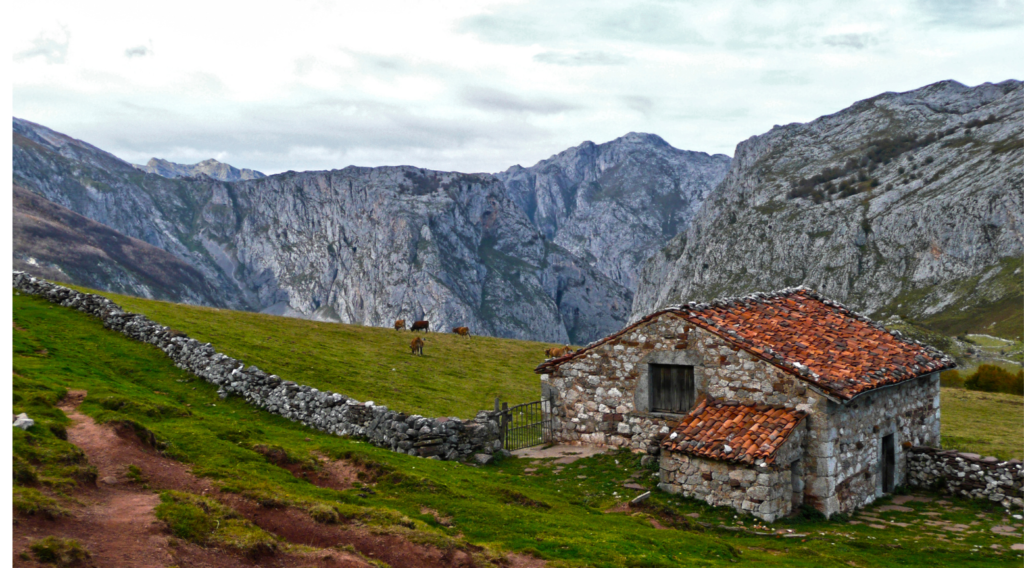
Sotres
High in the mountains near the Picos de Europa, Sotres sits on a flat, open area with wide land around it. It is one of the highest villages in Asturias, with pastures nearby and mountains visible in the distance.
Unlike many mountain villages, the area around Sotres feels open rather than closed in. You can see far in most directions. Most of the land is used for grazing, with stone walls and open fields instead of forests.
The village itself stays small and simple. You walk along narrow streets with stone houses close together. Daily life still depends on livestock and cheese making.
Sotres gives you a clear and simple look at rural mountain life in Asturias, along with open views across the surrounding land.
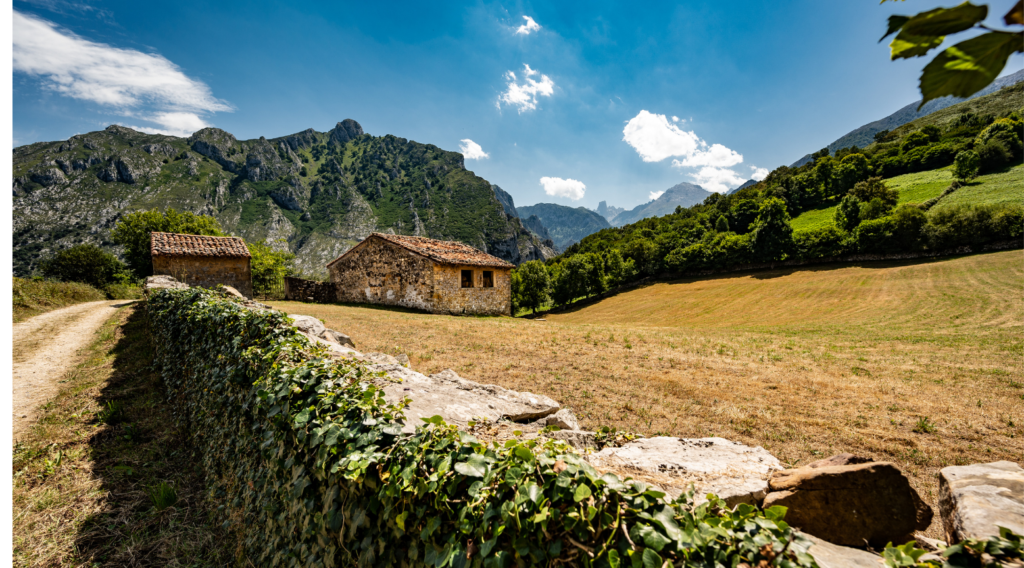
Arenas de Cabrales
In a wide valley near the Picos de Europa, Arenas de Cabrales sits with green hills and mountains around it. You quickly notice that it is larger than nearby villages like Bulnes or Sotres, with more services and a busier center.
Mountains surround the town, but the land nearby stays open and flat. Rivers and pastureland shape the valley, and the landscape remains visible as you move through the streets. The setting feels less steep than high mountain villages, but nature is always close.
Many people use Arenas de Cabrales as a base for exploring the area. You start hikes, mountain routes, and trips to nearby villages from here. In the town center, you still see traditional buildings that reflect the local style.
Arenas de Cabrales works well if you want mountain scenery while staying somewhere practical and easy to get around in eastern Asturias.
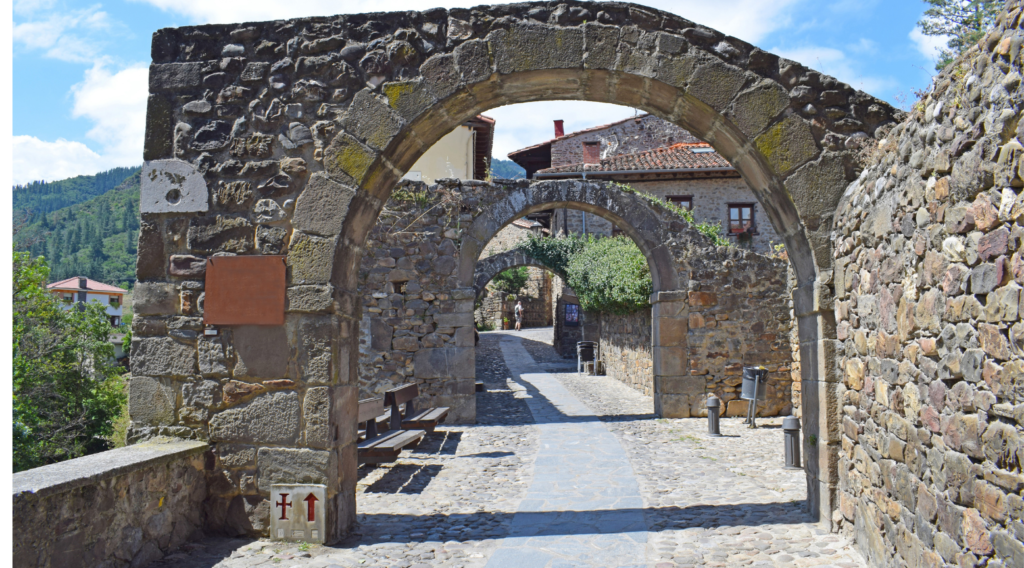
Cangas de Onís
Cangas de Onís is a historic mountain town best known for its stone bridge over the Sella River. You find the town at the edge of the mountains, where natural surroundings meet strong historical meaning.
The bridge acts as the main visual focus. You often see it from the riverbanks below, where it serves as a clear symbol of the town. Around it, you move through a compact center with traditional buildings, small plazas, and open views toward nearby hills and peaks.
The town feels more developed than remote villages like Bulnes or Sotres. Still, its location makes it a key base for exploring the surrounding mountain areas. From here, you reach nearby valleys and protected landscapes with ease.
Cangas de Onís draws appeal from its mix of history and setting. Its beauty comes from cultural importance paired with a clear mountain backdrop, rather than from isolation or scale.
Traditional Rural Villages in Asturias
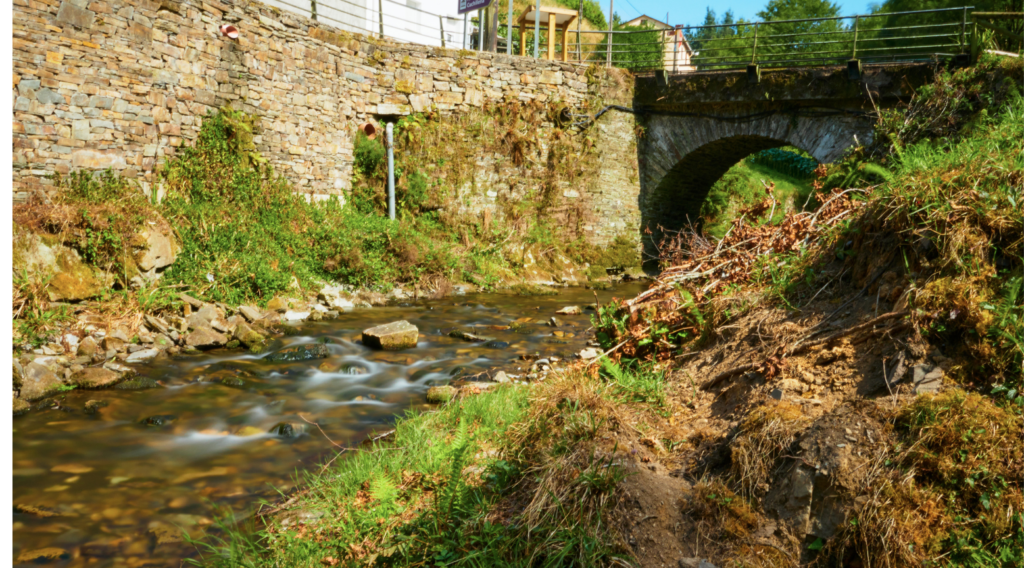
Taramundi
A rural village known for preserved traditions and green surroundings. You find it in western Asturias, set among rolling hills, forests, and small rivers. The landscape feels calm and pastoral, without high peaks or coastal cliffs.
You see traditional stone houses, narrow lanes, and a spread-out layout shaped by farming. Buildings sit close to the land. Gardens, pastures, and small farm structures surround many homes. This pattern reflects how the village grows over time.
Taramundi connects strongly to craft traditions and rural life. You notice this in the buildings and in daily routines. The village does not rely on major viewpoints or striking scenery. Its appeal comes from greenery, texture, and continuity.
If you want to understand rural heritage in Asturias, Taramundi offers a quiet and authentic village experience.
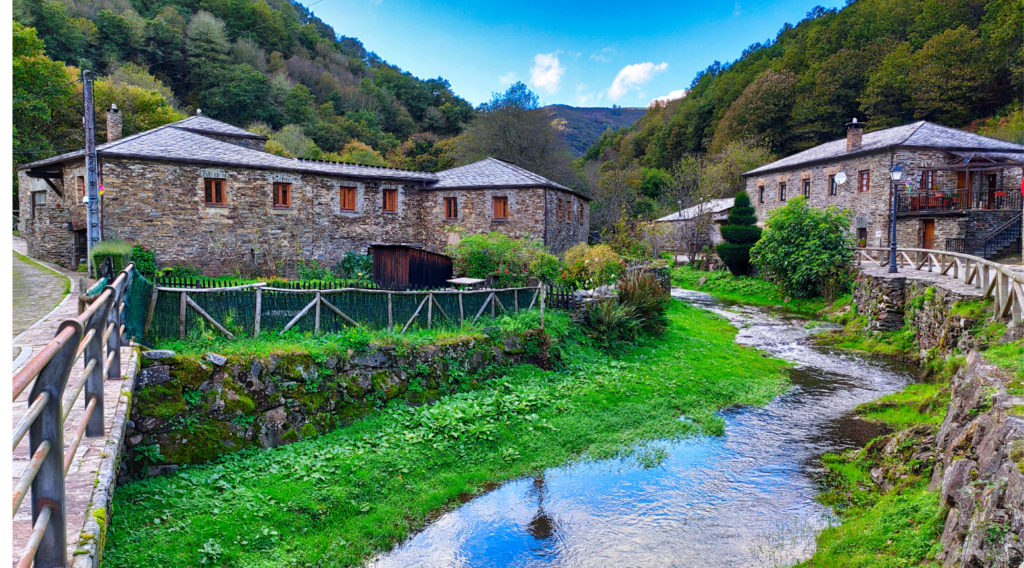
Santa Eulalia de Oscos
In western Asturias, Santa Eulalia de Oscos sits among forests and low hills. The landscape here feels softer and less steep than mountain areas like the Picos de Europa.
You walk through a small village with stone houses and slate roofs grouped around a compact center. The scale stays small, and modern buildings are limited, so the village blends easily into the surrounding countryside.
Life here feels quiet and steady. You do not see large tourist areas or busy streets. As you move around, you notice stone paths, small open spaces, and views toward green valleys.
Santa Eulalia de Oscos offers a calm view of rural life in Asturias, shaped by its setting and the way the village has been kept over time.
Beautiful Cities in Asturias (Urban Alternatives)
Asturias also includes several attractive cities. You usually know them more for culture, history, and urban life than for dramatic scenery. Still, some stand out for their historic centers, architectural character, and locations along the coast or on hillsides.
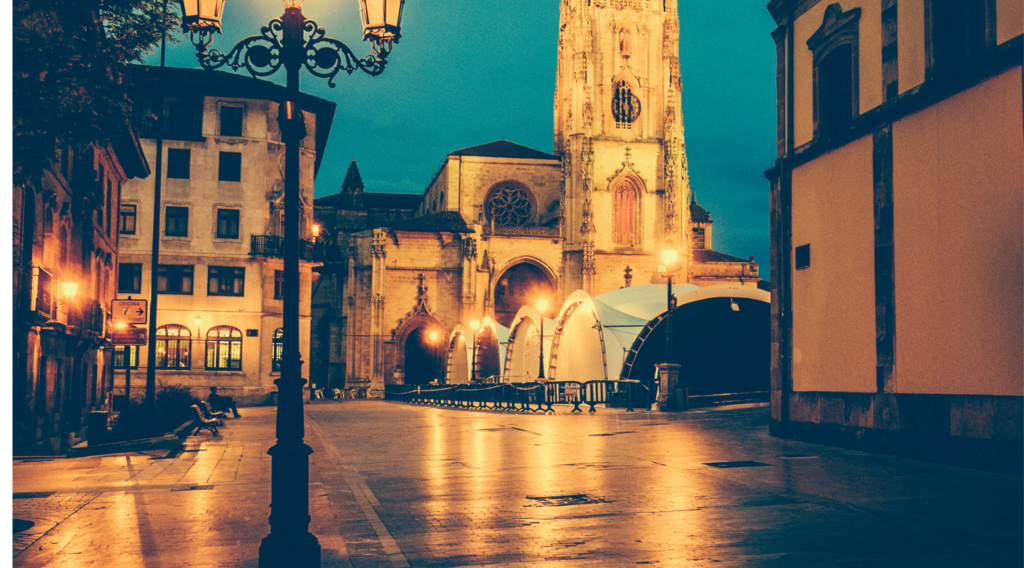
Oviedo
In the center of Asturias, Oviedo works as the region’s capital and main city. The focus here is on streets and buildings rather than natural scenery.
You walk through a historic center with narrow streets, arcaded plazas, and well-kept medieval and baroque buildings. The cathedral and nearby public buildings give the area a clear structure. Cafés, markets, and pedestrian streets add life without making the center feel crowded.
The layout feels ordered and easy to move through. As you walk, everything stays close together, and the scale remains comfortable.
Unlike coastal or mountain towns, you come to Oviedo for history, food, and local culture. It also works well as a base, with good transport, services, and access to other parts of Asturias.

Gijón
Along the Asturian coast, Gijón combines city life with direct access to the sea. You notice beaches, promenades, and busy urban areas all close together.
Most of the historic character sits in Cimavilla, a small old quarter on a headland between two beaches. From here, you walk along coastal paths with open views of the Cantabrian Sea. Below, San Lorenzo Beach runs along the shoreline and shapes the city’s seafront.
Even with the sea nearby, the city feels clearly urban. Buildings, streets, and services take up more space than historic areas, and much of the city reflects modern growth rather than older village layouts.
You often use Gijón as a base for its transport links, services, and beach access. Visually, it suits you if you want a coastal setting without giving up city life.
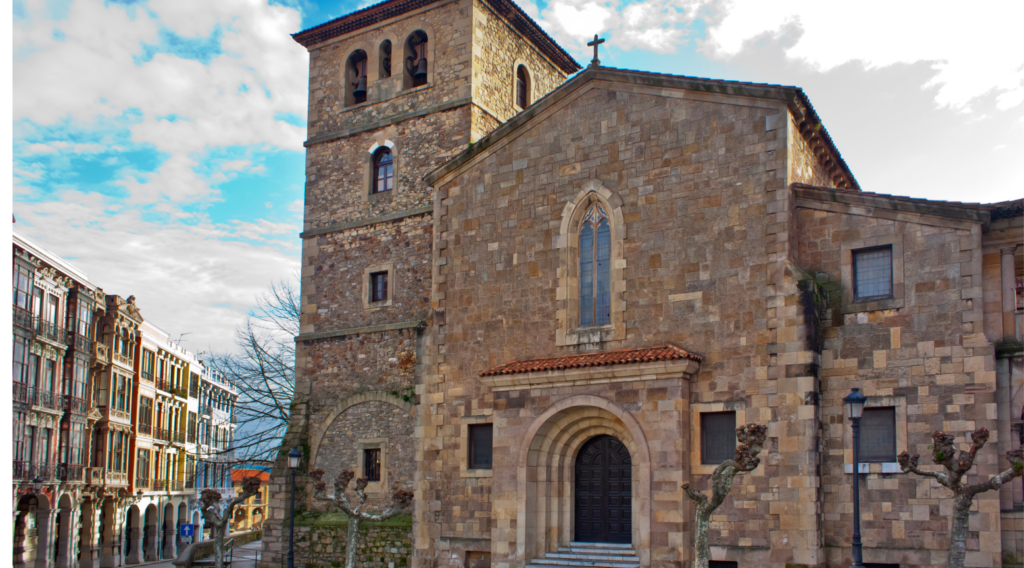
Avilé
In Avilés, most of the focus sits in a compact historic center that has changed very little over time. You walk through an old town shaped by trade and local life, with arcaded streets, stone buildings, and a clear street layout.
Moving around the center is easy on foot. You pass through small plazas and narrow streets that connect closely. Buildings stay similar in height and style, which keeps the area looking consistent. Architectural details add interest without making the space feel heavy or crowded.
There is little emphasis on coastal views or mountain scenery here. The surroundings stay simple, without dramatic landscapes nearby. Instead, the city’s character comes from how well the historic center has been kept.
Avilés suits you if you enjoy historic streets, traditional buildings, and a calm urban setting rather than scenery-driven views.
Suggested Routes to See the Most Beautiful Towns
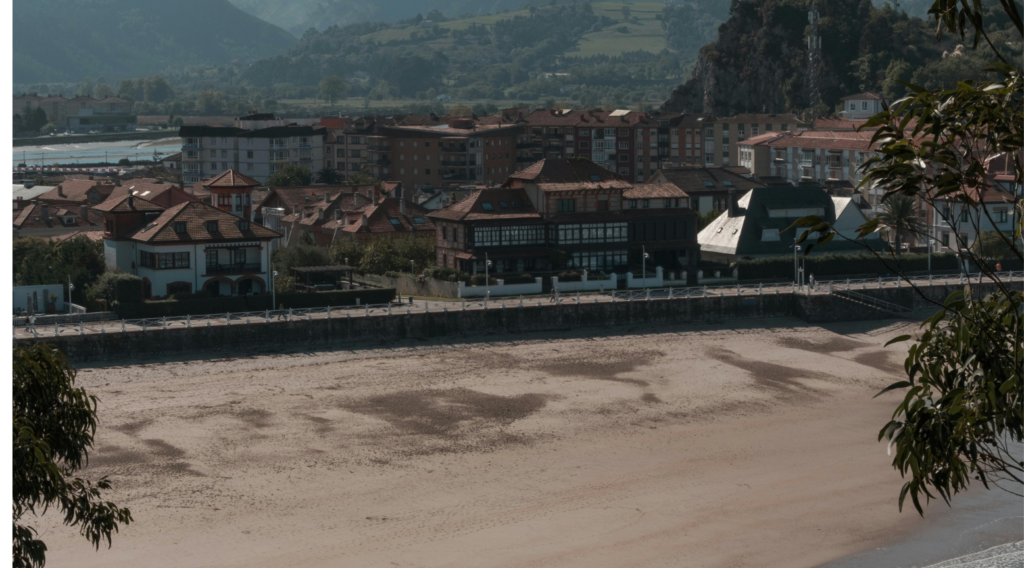
Coastal Route
You can plan a practical coastal route over three to five days along the Cantabrian coast between Llanes and Luarca. You start in Llanes or Ribadesella, where beaches and coastal walks sit close to town. You then travel west to Lastres and nearby Tazones. These stops work well for short visits focused on historic centers and small harbors.
From there, you stay overnight in Cudillero, which suits a longer stop because of its viewpoints and compact layout. You finish in Luarca or continue west to Puerto de Vega or Viavélez. Distances between towns stay short. Most days allow two or three stops. You still have time for viewpoints, promenades, and meals by the sea. This route stays easy to follow without feeling rushed.
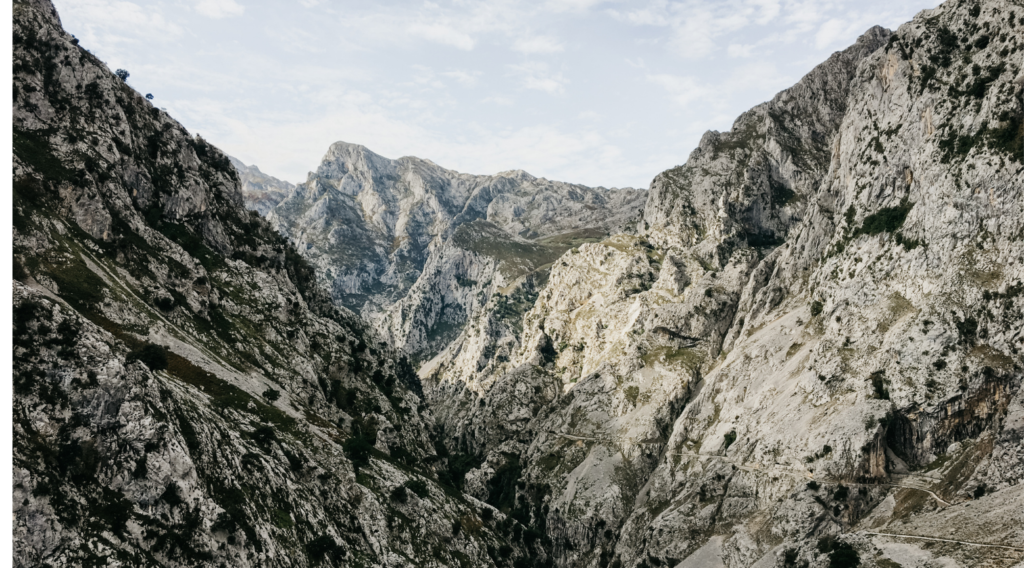
Mountain Route
A mountain route through Asturias can be planned over three to four days by focusing on the eastern interior and the Picos de Europa. Begin in Cangas de Onís as a base, using it to explore nearby valleys and river landscapes, then continue south toward Arenas de Cabrales, which works well as an overnight stop due to its location and services.
From there, visit Sotres for open high-altitude views and access to surrounding trails, and include a trip to Bulnes, either on foot or via the funicular, as a highlight of the route. Driving distances are short but roads are winding, so days are best kept flexible, with time allocated for slow travel, village walks, and mountain scenery rather than covering long distances.
Coast and Mountains Combined
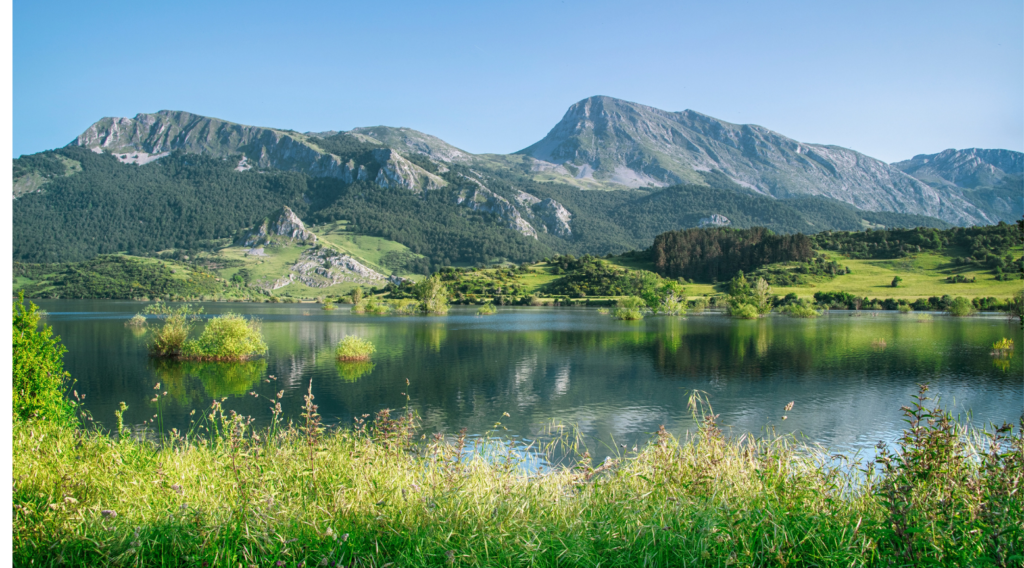
A combined coast and mountains route works well over four to six days and highlights how quickly Asturias transitions from sea to highlands. Start along the coast in Llanes or Ribadesella, spending time on beaches and coastal walks before driving inland to Cangas de Onís, which serves as a natural link between landscapes.
From there, continue toward Arenas de Cabrales and nearby mountain villages such as Sotres or Bulnes, then return toward the coast farther west, stopping in towns like Lastres or Cudillero. This approach allows coastal and mountain scenery to be experienced within short driving distances, creating a varied itinerary that balances seaside towns with rural and alpine environments.
Practical Travel Information
Best Time to Visit Asturias
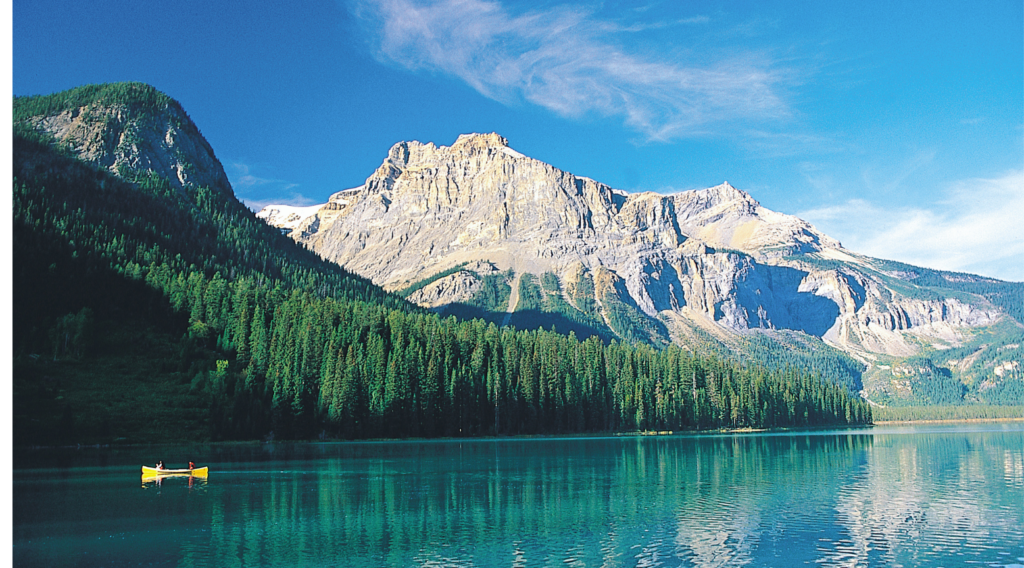
The best time to visit Asturias is generally spring and early autumn, when the landscape is at its greenest and temperatures are mild. During these seasons, coastal towns and mountain villages are less crowded, making it easier to enjoy viewpoints, historic centers, and walking routes at a relaxed pace.
Summer is the most popular time to visit, particularly in July and August, when beaches, festivals, and seaside towns are at their liveliest. While this period offers warmer weather and longer days, popular coastal towns can become crowded, and accommodation prices tend to rise.
Weather in Asturias is more variable than in southern Spain, with frequent cloud cover and occasional rain throughout the year. However, this climate contributes to the region’s lush landscapes, which remain a key part of its visual appeal regardless of season.
Getting Around
Getting around Asturias is easiest by car, especially for travelers who want to visit smaller coastal villages and mountain settlements. Many of the most beautiful towns are connected by regional roads that offer scenic views but require slower driving, particularly in the mountains.
Coastal towns are generally easier to reach, with shorter distances and more direct routes between destinations. Mountain villages often involve winding roads, elevation changes, and longer travel times despite short distances on the map.
Public transport links larger cities and some towns, but it is limited when it comes to remote villages and flexible itineraries. For travelers following coastal or mountain routes, having a car allows greater freedom to stop at viewpoints, explore smaller settlements, and adjust plans based on weather conditions.
Conclusion
Asturias’ beauty is shaped by the constant interplay between sea and mountains, with towns and villages adapting to some of the most varied landscapes in northern Spain. From colorful fishing ports along the Cantabrian coast to remote settlements surrounded by limestone peaks, the region offers many distinct expressions of beauty.
Defining what makes a town beautiful—natural setting, architecture, views, local character, and preservation—helps explain why certain places consistently stand out. Coastal towns such as Cudillero, Lastres, and Llanes offer dramatic scenery and strong maritime identity, while mountain villages like Bulnes and Sotres showcase Asturias’ rural and alpine character.
Among them, Cudillero is most often cited as the most beautiful town overall, but grouping destinations by landscape provides a more practical way to explore the region. Whether focusing on the coast, the mountains, or a combination of both, Asturias rewards slow travel and careful observation, revealing its beauty gradually through scale, setting, and atmosphere.
Pingback: Where to Stay in Asturias: 9 The Best Towns, Areas, and Hotels | Rovenect
Pingback: What Asturias Is Known For: 7 Incredible Reasons to Visit | Rovenect